
I didn't install OpenClaw yet.
That might seem strange — especially since this tool looks powerful — but before clicking any install commands, I needed to understand the space I'm stepping into. OpenClaw is new, the landscape is fragmented, and most publicly available examples assume knowledge I don't yet have.
So Day 1 is about one thing:
-> figuring out what OpenClaw actually is — and what it isn't — before doing anything hands-on.

Where I started: real, credible sources
These are the exact resources I read and used today:
- Official OpenClaw documentation: https://docs.openclaw.ai/start/getting-started
- OpenClaw community Discord (reading only): https://discord.gg/AmpfrQuu
- Reddit discussions by real users: https://www.reddit.com/r/openclaw/
- Community ecosystem site (third-party): https://clawdrop.org/
- Anthropic's deep foundational guide on building skills for Claude: The Complete Guide to Building Skill for Claude
- Contextual reference from NVIDIA (NemoClaw): https://www.nvidia.com/en-us/ai/nemoclaw/
To get a realistic understanding of the framework, I intentionally stuck to primary sources—official documentation, technical research, and active developer communities—rather than relying on assmptions.
What I think OpenClaw is (based on reading, not usage)
From the official docs and community threads:
- OpenClaw is an AI automation framework.
- It orchestrates language models and tools.
- The intended outcome is to break down goals and execute tasks automatically.
That sounds promising, but it's also the same basic idea behind many agent systems. The challenge isn't the idea; it's the execution.
And that's exactly where research (like the Anthropic guide) becomes useful.
Why OpenClaw's own documentation matters
The official documentation I linked above (docs.openclaw.ai) focuses directly on:
- core framework architecture and concepts
- how to structure agent tools and integrations
- defining expected behaviors and necessary guardrails
This matters because OpenClaw isn't just a basic script you run blindly — it's a foundation that connects language models to real-world actions. By reading the actual documentation first, you quickly realize what the framework natively supports versus where you'll need to write custom logic.
The official guide helped me understand:
- the intended lifecycle of an automated task
- how the developers actually expect you to handle execution errors
- why setting up a secure environment is emphasized from day one
I'm not going to summarize the entire documentation site here, but reading through the fundamentals deeply influences the way I plan to configure and control this tool.

What the community is actually saying
On Discord and Reddit, user discussions are illuminating:
Common questions:
- Why does installation break at step X?
- What configuration should I use?
- Is this stable yet?
Patterns I observed:
- multiple partial solutions
- people guessing at fixes
- no single canonical answer
This tells me the ecosystem is still being built — and that correct, safe practice is not yet common knowledge.
Prompt injection awareness and security
While reading all these sources today, I kept running into the same theoretical concern: prompt injection attacks.
Prompt injection happens when:
- user input tricks an AI agent into doing something unintended
- LLMs interpret directives in harmful ways
Because OpenClaw connects models to actions, this is a real consideration. Even if I'm not executing anything yet, I'm thinking ahead:
- sanitize all inputs before execution
- use sandbox environments
- limit what the agent can access
- monitor logs constantly
Anthropic's PDF reinforced this idea: skills must be constrained, not just casually prompted.
Sandbox testing plan (when the time comes)
When I do install OpenClaw, it will be in a safe environment:
- a spare laptop with no personal access
- a virtual machine or container for isolation
- only sandbox websites and dummy APIs
- monitoring and logging on all activity
- stepwise testing (read-only first)
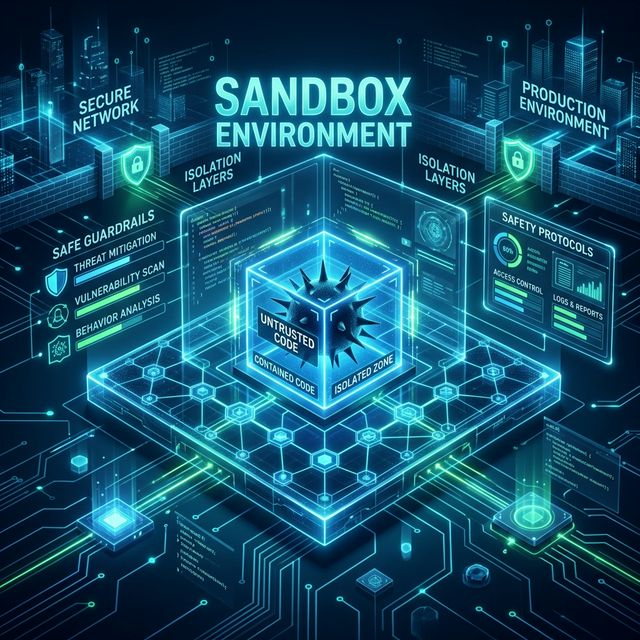
This is not paranoia — it's best practice, especially when dealing with early agent systems.
Early takeaways (not hype, just observation)
After today's research:
- OpenClaw looks interesting.
- Documentation exists but is incomplete.
- Users struggle with setup patterns.
- There's no standard "best practice" documented yet.
- Prompt injection and safety are real considerations.
This is not a tool I would install blindly. But I will install it — in the right environment, step by step.
What's next — day 2 goals
Tomorrow's focus:
- Prepare the environment.
- Document prerequisites.
- Anticipate common setup pitfalls.
- Avoid mistakes other users have already documented.
Only after that will I attempt the actual installation — and even then, with caution.
Why I'm writing this
Most available content about OpenClaw is either promotional or fragmented. By documenting what I actually read, and where I found it, I'm trying to create a transparent and useful baseline for others who want to explore responsibly.
This isn't about hype. It's about process.